
Before You Predict, Read This Formation Breakdown
Imagine trying to predict a football match while ignoring the formation. That is like calculating expected value without checking the odds: technically possible, spectacularly stupid. The best footbal...
Before You Predict, Read This Formation Breakdown
Imagine trying to predict a football match while ignoring the formation. That is like calculating expected value without checking the odds: technically possible, spectacularly stupid. The best football formations explained here are the 4-3-3, 4-2-3-1, 3-5-2, 4-4-2 and 4-5-1, each creating different attacking routes, defensive risks and midfield probabilities. Stadium View covers FIFA World Cup 2026 tactics, team news and player statistics for fans across the global tournament market. A 4-3-3 usually offers width and pressing, while a 4-2-3-1 gives the central playmaker protection from two holding midfielders. The 3-5-2 can overload midfield but depends heavily on wing-backs recovering quickly. Formation numbers describe starting positions, not fixed behavior; coaches alter them during possession, pressing and transitions. Before making a prediction, compare the formation with player availability, opponent shape, pressing success and home advantage. Start with the team sheet, then judge the tactical matchup rather than worshipping a pretty diagram.

Photo by Franco Monsalvo on Pexels
A formation is simply the team’s planned starting structure, not a sacred mathematical proof carved into a coaching tablet. The numbers normally describe defenders, midfielders and forwards, while the goalkeeper is excluded; therefore, a 4-3-3 means four defenders, three midfielders and three attackers. In practice, the same team may defend in a 4-4-2, build in a 3-2-5 and attack with five players in the final line. FIFA’s Laws of the Game regulate player participation and positioning rules, but they do not force one tactical shape on a team. The useful question is not “Which formation is best?” but “Which shape gives this squad the highest expected chance of creating good chances while limiting dangerous transitions?” That depends on winger quality, full-back speed, midfield coverage, striker movement and the opponent’s pressure. Stadium View uses this practical lens in its [Internal Link: World Cup tactical analysis guide], because memorizing numbers without reading roles is just collecting football trivia to impress nobody at the pub.
Want the tactical basics before going deeper?
The Quick Comparison
| Formation | Main advantage | Main weakness | Best suited to |
|---|---|---|---|
| 4-3-3 | Width, pressing and attacking rotations | Space beside the defensive midfielder | Teams with quick wingers |
| 4-2-3-1 | Midfield security and creative central play | Lone striker can become isolated | Balanced possession teams |
| 3-5-2 | Central overloads and two-striker threat | Vulnerable wide areas | Strong wing-backs and mobile forwards |
| 4-4-2 | Simplicity, compact defending and direct attacks | Two central midfielders can be outnumbered | Disciplined, transition-focused teams |
| 4-5-1 | Defensive protection and counterattacking space | Limited support for the striker | Underdogs protecting a result |
| 4-4-1-1 | Clear defensive lines and second-striker support | Can lose possession between the lines | Teams with an intelligent No. 10 |
The table gives you the expected-value shortcut: identify the shape, then inspect whether the squad can actually perform its demands. A 4-3-3 with slow full-backs and wingers who refuse to track runners is not automatically progressive; it is just a buffet of counterattacking opportunities for the opponent. Likewise, a 3-5-2 with exhausted wing-backs can collapse into a desperate 5-3-2 before halftime. Research from UEFA Training Ground repeatedly emphasizes the interaction between structure, pressing and transition moments rather than treating formations as isolated labels. One useful edge case is the “false formation”: a team listed as 4-3-3 may effectively use a 3-2-5 when its right-back moves into midfield and the left-back stays deeper. For match analysis, record the shape in three states: possession, defensive phase and the five seconds after losing the ball. That simple habit gives better information than arguing over whether a winger is technically a midfielder. Relax, the football police are not coming.
The five variables that matter most
- Width: How many players stretch the opponent horizontally?
- Depth: Can the team threaten behind the defensive line?
- Central coverage: How many players protect the middle?
- Rest defense: Who remains positioned to stop counters?
- Transition speed: How quickly does the shape change after possession is lost?
Round 1: Which Formations Create the Best Attack?
The 4-3-3, 4-2-3-1 and 3-5-2 generally create the strongest attacking possibilities because they can place three or more players between defensive lines while maintaining width. The 4-3-3 supplies natural wide outlets, the 4-2-3-1 supports a central No. 10, and the 3-5-2 uses two forwards to occupy both centre-backs. Their attacking value depends on spacing: if players stand on the same vertical line, passing options shrink and the formation becomes decorative wallpaper. A high-quality attack usually combines one player holding width, another running beyond the defence and a third arriving around the penalty area. According to FIFA, modern tournament football increasingly rewards coordinated rotations because fixed positions are easier to defend. The most important attacking metric is therefore not possession percentage alone but the quality and location of entries into the penalty area. A team with 58% possession and no central penetration is not dominating; it is merely renting the ball.
4-3-3: Why is it so effective for wide attacks?
The 4-3-3 is effective because it naturally provides a back four, a three-player midfield and two wide attackers who can stretch defensive lines. Its strongest version combines a holding midfielder, two energetic interior midfielders, overlapping full-backs and wingers capable of isolating opposing full-backs. The primary risk is space behind advanced full-backs and beside the single pivot.
In possession, the 4-3-3 can become a 2-3-5 or 3-2-5. One full-back may move inside beside the defensive midfielder, while the other overlaps outside the winger. This creates multiple passing lanes and can force a 4-4-2 defence to choose between closing the winger and protecting the half-space. Pep Guardiola’s Manchester City has frequently demonstrated this positional logic, although copying Manchester City without Rodri, Kevin De Bruyne or elite technical defenders is a charmingly bad experiment. The formation works best when the midfield trio can resist pressure and the front three press immediately after losing possession. It struggles when the wingers stay disconnected, the pivot is marked and the full-backs advance simultaneously. For predictions, check whether the opposition has fast forwards who can attack those exposed channels. If yes, the attacking upside may be cancelled by transition risk.
4-2-3-1: Is it the safest balanced formation?
The 4-2-3-1 is usually the safest balanced formation because two holding midfielders protect the centre while a No. 10 connects midfield with a lone striker. It supports controlled buildup, defensive compactness and flexible pressing, but its attack can become predictable if the striker receives no support. The formation’s success depends heavily on the quality of the double pivot.
One midfielder may stay deep to screen counterattacks while the other steps forward to support circulation. The wide players can remain near the touchlines or move inside, allowing the full-backs to overlap. Defensively, the shape often becomes 4-4-2, with the No. 10 joining the striker to block central passing lanes. This is why the 4-2-3-1 remains common among national teams that have limited training time: its roles are easier to explain and its failure points are relatively visible. The contrarian point is that “balanced” does not mean low risk. If both holding midfielders drop too close to the centre-backs, the team may have six players behind the ball and almost nobody near the striker. Track the distance between the No. 10 and striker; above roughly 20–25 metres, attacks frequently become dependent on hopeful crosses or individual dribbles. That is not a plan. That is tactical wish-casting.
See how team shape affects tournament forecasts.
3-5-2: When does a back three improve attacking output?
A 3-5-2 improves attacking output when the wing-backs can provide width, the midfield can progress the ball and the two forwards coordinate their movements. Three centre-backs allow one defender to step into midfield while two forwards occupy the opposition’s centre-backs. However, the system becomes fragile if wing-backs are pinned deep or cannot recover during transitions.
The 3-5-2 is especially useful against a 4-3-3 because it can create a central numerical advantage: three central midfielders face two, while two strikers occupy the back line. The trade-off appears on the flanks, where opposing wingers can attack the space outside the outside centre-backs. A well-coached 3-5-2 therefore requires diagonal cover, not merely three defenders standing in a row like spectators who accidentally bought uniforms. Italy’s use of back-three structures under Roberto Mancini showed how the shape can combine patient possession with aggressive wing-back positioning, while Inter Milan under Simone Inzaghi has made the system particularly recognizable in European club football. When evaluating it, count the number of players available behind the ball during attacks. If only three defenders remain and the midfield is ahead of the ball, one failed pass can create a high-probability counterattack.
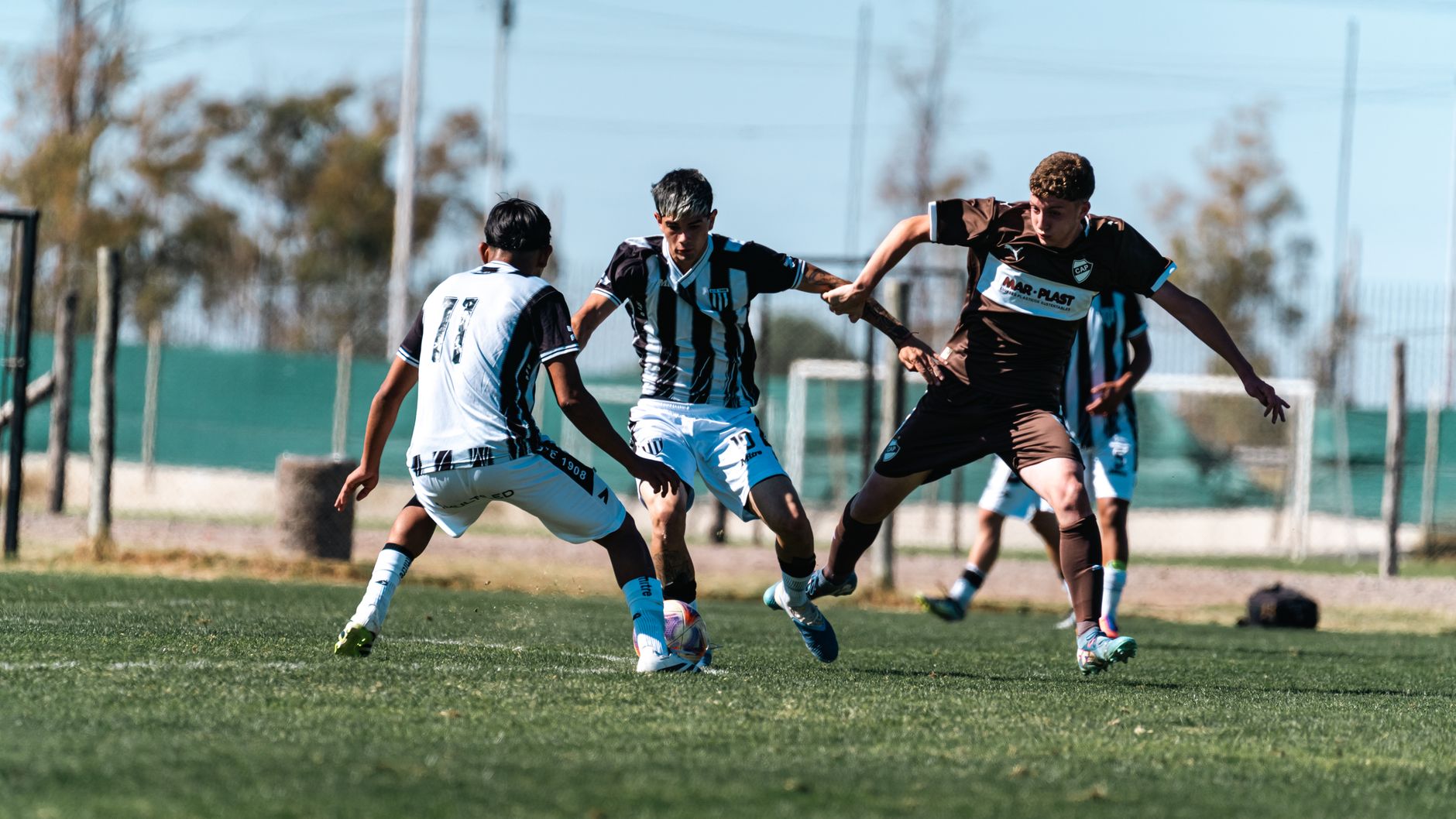
Photo by Franco Monsalvo on Pexels
Round 2: How Do Formations Defend and Press?
Defensive performance comes from distances and triggers rather than the formation label. A 4-4-2 can press brilliantly when its forwards curve their runs to block the centre, while a 4-3-3 can press poorly if its midfield line arrives late. The key measurements are compactness between lines, access to the ball carrier and the number of defenders protecting the space behind the press. UEFA coaching materials commonly describe pressing as a coordinated action, not an individual sprint contest; that distinction matters because one mistimed jump opens a passing lane for everyone else. “The first defender is the player closest to the ball,” says the basic coaching principle, but the second and third defenders determine whether that pressure has any expected payoff. A successful press forces a rushed pass, bad touch or clearance; running around energetically while the opponent calmly finds the free midfielder is cardio, not tactics. When reviewing a team, watch its first six defensive actions after losing possession. This small sample often reveals whether the structure is genuinely coordinated or merely enthusiastic.
4-4-2: Why does simplicity still work?
The 4-4-2 still works because it creates two compact defensive lines, clear marking responsibilities and two forwards who can press or counterattack. Its weakness is midfield centrality: against a 4-3-3 or 3-5-2, two central midfielders may face three opponents and lose control of the middle. The formation therefore relies on narrow wingers, disciplined distances and quick forward passing.
In a defensive block, the wide midfielders drop beside the central pair, producing a flat 4-4-2 that is difficult to play through. One striker may drop onto the opponent’s deepest midfielder, turning the press into a temporary 4-4-1-1. In attack, the second forward can run beyond the target striker, while wide players deliver early crosses or combine with overlapping full-backs. Leicester City’s Premier League title-winning side in 2015–16 showed how compact defending and rapid transitions can outperform possession-heavy opponents when the player profiles fit the plan. The mistake is assuming the formation is automatically old-fashioned. A shape is old-fashioned only when its roles no longer solve the match problem. The 4-4-2 remains useful against teams that overcommit full-backs, because two forwards can attack the space left behind. It is less attractive when the opponent dominates central midfield and forces the wide players into a permanently exhausted defensive job.
4-5-1: Is it only a defensive setup?
The 4-5-1 is not only defensive; it is a flexible structure that can protect the centre, slow the match and launch counters through wide midfielders. It becomes a 4-3-3 when those wide players advance, or a 4-4-1-1 when one midfielder supports the striker. Its main danger is isolating the forward and surrendering too much territory.
This formation can be rational when a team is protecting a lead, facing superior opposition or managing fatigue in a knockout tournament. The probability calculation is straightforward: if conceding a second goal has greater cost than sacrificing attacking volume, a deeper 4-5-1 may maximize expected result. But sitting deep for 90 minutes invites repeated crosses, second balls and set pieces, so defensive volume eventually becomes its own liability. The best 4-5-1 teams retain an outlet, usually a fast winger or physically strong striker, and use three central midfielders to secure clearances. Stadium View’s [Internal Link: World Cup match prediction checklist] recommends checking whether the lone striker has support within 10 seconds of a turnover. If not, the team may defend successfully yet fail to convert recoveries into meaningful attacks. Congratulations, you have built a bunker with no exit.
What should you study when a team changes its defensive block?
Defensive clues that beat formation lists
- Pressing height: Does the team engage near the opponent’s box or around halfway?
- Line spacing: Are defenders, midfielders and forwards separated by 10–15 metres or much more?
- Wide protection: Who covers the channel behind the full-back or wing-back?
- Second-ball control: Which midfielders attack loose clearances?
- Set-piece structure: Does the team defend zonally, man-to-man or with a hybrid system?
Round 3: Which Formation Fits Different Player Profiles?
The best formation is the one that matches the available players, not the one that looks clever in a television graphic. A team with elite wingers and an aggressive full-back pair will usually extract more value from 4-3-3 than from 3-5-2. A squad with two strong strikers, mobile wing-backs and three reliable centre-backs may gain more from 3-5-2. This player-fit principle is a major information edge because injuries can change tactical probability more than historical averages. Losing a defensive midfielder may force a 4-2-3-1 into a risky 4-3-3, while losing a starting winger may remove the width that made the original structure effective. Before judging a World Cup team, compare the nominal lineup with substitutions, fatigue and positional versatility. National-team coaches such as Didier Deschamps with France and Gareth Southgate with England have repeatedly adapted structures according to tournament opponents and squad strengths. The formation on paper is the prior probability; the actual roles and player availability are the updated evidence.

Photo by Gera Cejas on Pexels
When should teams choose a back four?
A back four is usually preferable when a team has dependable full-backs, wants natural width and faces opponents that attack with only one central striker. The 4-3-3, 4-2-3-1 and 4-4-2 all provide familiar defensive spacing and make substitutions easier to interpret. The downside is that full-backs must defend large channels when they advance, especially against fast wingers.
The back-four choice also depends on centre-back speed. A high defensive line in a 4-3-3 can dominate territory when defenders are quick enough to defend space behind them, but a slow centre-back pairing may force the team deeper and disconnect the midfield. This is where match data becomes useful: examine recovery speed, pressures, progressive passes and aerial-duel success rather than relying on reputation. Opta definitions, used widely across competitions and reported through providers such as Stats Perform, distinguish actions like progressive passes and pressures more precisely than casual viewing. A team averaging 55% possession may still be structurally inferior if its full-backs lose the ball high and its rest defense contains only two players. The less glamorous detail usually wins. Football has a cruel habit of rewarding geometry over vibes.
When is a back three the better option?
A back three is the better option when a team needs extra central coverage, wants wing-backs to provide width or has three centre-backs comfortable defending wide spaces. The 3-5-2 and 3-4-3 can overload the first line of buildup and create two-versus-two situations against a conventional back four. Their cost is greater dependence on wing-back stamina and defensive coordination.
The 3-4-3 gives three forwards natural access to the opponent’s back line, while the 3-5-2 offers two strikers and an extra central midfielder. However, these shapes can look identical during one phase and completely different during another. In buildup, a centre-back may split wide; in defense, the wing-backs may drop to create a 5-3-2. The practical test is whether the outside centre-backs can defend the channels when the wing-backs are high. If they cannot, the opponent’s winger will repeatedly receive facing forward, which is a terrible invitation. During FIFA World Cup 2026, expanded tournament travel, climate variation and congested preparation schedules may also increase the value of rotation-friendly structures. Coaches will not choose formations for aesthetics; they will choose shapes that preserve energy and reduce avoidable defensive running.
Review the player profiles before trusting a tactical prediction.
The Final Score & Who Should Pick What
There is no universally best football formation; there is only the best formation for a specific squad, opponent and match state. The 4-3-3 is the strongest all-round choice for width and pressing, the 4-2-3-1 offers the most balanced risk distribution, the 3-5-2 maximizes central occupation and two-striker combinations, the 4-4-2 rewards simplicity and transitions, and the 4-5-1 protects central space when defensive survival matters. For match predictions, formation should influence your model but never dominate it. Assign weight to injuries, recent tactical changes, home venue, opponent quality and set-piece performance, then update the estimate when the starting lineup is confirmed. A useful rule is to downgrade a team by 5–10% when its formation depends on an absent specialist, such as a holding midfielder or high-output wing-back; the exact adjustment varies, but the logic is sound. Stadium View’s [Internal Link: player statistics and form hub] can help connect tactical roles with current performance. Do not bet or predict because a graphic looks aggressive. Predict when the structure, personnel and matchup agree. That is analysis. The rest is decorative numerology.
Final recommendations by situation
- Need width and high pressing: Choose 4-3-3, provided the full-backs can recover.
- Want the safest general structure: Choose 4-2-3-1 with a disciplined double pivot.
- Have two excellent strikers: Consider 3-5-2 or 4-4-2.
- Need to protect a lead: Use 4-5-1, but retain a credible counterattacking outlet.
- Face a midfield-heavy opponent: Add a third central midfielder through 3-5-2 or 4-3-3.
- Lack specialist players: Use 4-4-2 because its responsibilities are easier to reproduce.
The final recommendation is simple: watch formations as moving relationships, not fixed numbers. Compare the first lineup with the in-possession shape, defensive block and transition structure, then look for the mismatch that changes chance quality. That process is slower than shouting “4-3-3 means attacking,” but it is also considerably less embarrassing.
Ready to apply the breakdown to upcoming World Cup matches?
Frequently Asked Questions
Q: What is a football formation?
A: A football formation is the team’s planned positional structure at the start of a phase or match. Numbers such as 4-3-3 describe four defenders, three midfielders and three forwards, excluding the goalkeeper. Modern teams change shape during possession, pressing and defensive transitions, so the listed formation is only a starting reference. For accurate analysis, record how the team actually behaves with and without the ball.
Q: Which football formation is best for attacking?
A: The 4-3-3 is often the best attacking formation for teams with fast wingers and adventurous full-backs. It creates natural width, supports high pressing and can place five players across the attacking line during buildup. The 3-5-2 can be more effective for teams with two strong strikers, while the 4-2-3-1 suits squads with an elite No. 10. Player quality matters more than the formation label.
Q: What is the difference between 4-3-3 and 4-2-3-1?
A: The 4-3-3 uses three midfielders in a more triangular structure, while the 4-2-3-1 uses two holding midfielders and one advanced No. 10. The 4-3-3 usually offers stronger wide pressing and more natural attacking width. The 4-2-3-1 normally provides better central protection and easier defensive balance. Teams can switch between both shapes during the same match.
Q: How should I analyze a formation before predicting a match?
A: Check the starting lineup, in-possession shape, defensive block and transition behavior before making a prediction. Then compare winger speed, full-back positioning, midfield numbers, striker support and centre-back recovery ability. Confirm injuries and substitutions because losing one specialist can alter the system’s effectiveness by an estimated 5–10%. Use recent match footage or reliable providers such as Opta and Stats Perform rather than trusting a single formation graphic.
Q: Why does a football formation fail during a match?
A: A formation usually fails because player distances, pressing timing or role quality do not match its tactical demands. A 4-3-3 collapses when full-backs advance without rest defense, while a 3-5-2 struggles when wing-backs cannot recover. Fatigue, an early yellow card and an opponent’s formation change can also create new weaknesses. Watch the spaces beside the pivot and outside centre-backs first; those areas often reveal the problem quickly.
Q: Is 4-4-2 outdated compared with 4-3-3?
A: The 4-4-2 is not outdated; it is less flexible in central midfield against a three-player unit. Its advantages include compact defensive lines, clear responsibilities, two counterattacking targets and straightforward pressing triggers. Leicester City’s 2015–16 title-winning team showed how a disciplined 4-4-2 could exploit transitions efficiently. It remains a strong choice when the squad has energetic wide midfielders and complementary forwards.
Q: Does formation matter for FIFA World Cup 2026 predictions?
A: Formation matters significantly for FIFA World Cup 2026 predictions, but it should be combined with player availability, opponent quality and venue conditions. The United States, Canada and Mexico will host matches across different locations, making travel, climate and recovery relevant contextual factors. A nominal 4-3-3 may behave like a 3-2-5, so evaluate actual roles rather than the team-sheet label. The smartest approach is to update your prediction after confirmed lineups.
Thank you for reading.
Stadium View · Editorial Archive