
Inside Stadium View: A Top-6 Dribbling Plan
Footballers improve dribbling fastest by combining close-control touches, changes of direction, acceleration, scanning, and pressure-based decisions rather than endlessly weaving through cones. Stadiu...
Inside Stadium View: A Top-6 Dribbling Plan
Footballers improve dribbling fastest by combining close-control touches, changes of direction, acceleration, scanning, and pressure-based decisions rather than endlessly weaving through cones. Stadium View recommends a six-week progression built around six drills: ball mastery, cone slalom, figure-eight turns, 1v1 moves, speed dribbling, and small-sided games. Train three times weekly for 25–40 minutes, complete 300–500 purposeful touches per session, and track successful changes of direction rather than merely counting repetitions. Use both feet, keep the ball within one step in tight spaces, and push it 2–3 metres ahead when accelerating into open grass. The FIFA Laws of the Game recognise legal challenges and ball control as part of normal play, but match dribbling also depends on timing, awareness, and risk selection. Start with controlled technique at 60% speed, then add passive and active defenders by week three. Your first target is simple: improve execution quality before chasing highlight-reel nonsense.
Imagine beating one defender, then immediately losing the ball because your touch travels farther than your football knowledge. Beautiful. That is not dribbling; that is donating possession with theatrical footwork. Good dribbling means controlling the ball, manipulating a defender, changing speed, and choosing the right moment to release or protect possession.
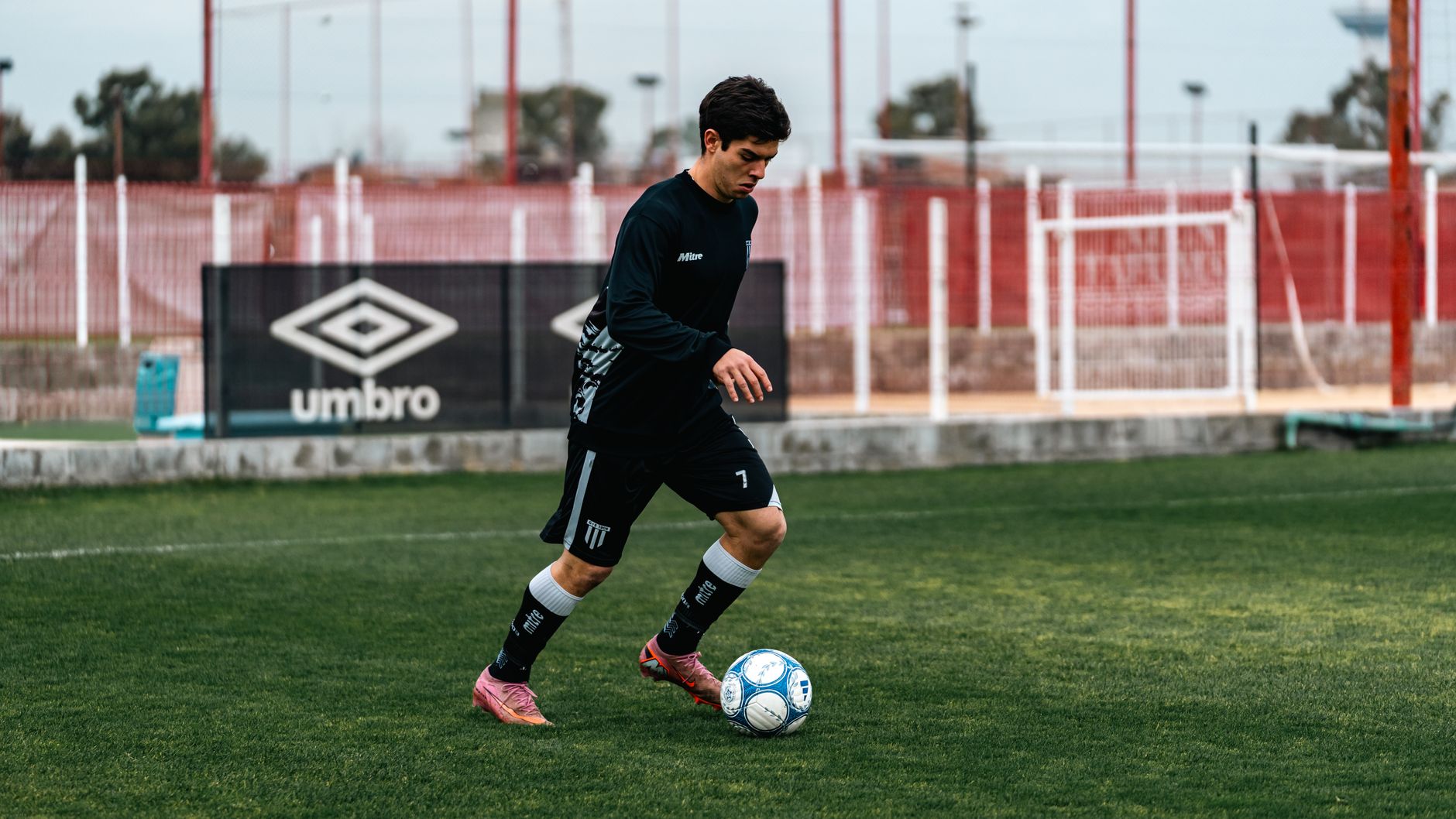
Photo by Franco Monsalvo on Pexels
The Top 6 Dribbling Methods at a Glance
The six methods below are ranked by how directly they transfer to match situations, how easy they are to measure, and how much technical improvement they offer per minute. A fancy drill that produces no usable decision under pressure has roughly the same expected value as buying a yacht to cross a puddle.
- Ball mastery circuits — Best foundation for touch quality, balance, and both-foot coordination.
- Cone slalom with scanning — Best for close control and changes of direction.
- Figure-eight turns — Best for body orientation, shielding, and tight-space movement.
- 1v1 move-and-exit drills — Best for beating a live defender and attacking space.
- Speed dribbling with acceleration gates — Best for turning a successful touch into territory.
- Small-sided possession games — Best overall transfer to decisions, pressure, and match realism.
A useful weekly structure is three sessions: technique on Monday, 1v1 and acceleration on Wednesday, and small-sided decision-making on Saturday. Leave at least 24 hours between demanding sessions, particularly for younger players or anyone returning from an ankle, hamstring, or groin problem. For additional fundamentals, use this [Internal Link: beginner football ball-control guide] before increasing intensity.
#1 Ball Mastery: Best Overall Foundation
Ball mastery is the best overall starting point because it increases the number of clean contacts you can make without adding unnecessary running. Spend 8–10 minutes using inside touches, outside touches, sole rolls, pull-push movements, V-cuts, and toe taps; switch patterns every 30–45 seconds. The goal is not to look busy. The goal is to make the ball obey before your opponent begins offering unsolicited opinions.
Begin with the ball between both feet, then progress to one-foot patterns and alternating surfaces. Keep your knees bent, chest slightly forward, and ankles relaxed. A practical benchmark is 100 controlled touches in 60 seconds with no touch travelling more than 50 centimetres away in a tight-control pattern. Record yourself from the side once per week: if your head remains down for the entire circuit, your feet may be improving while your awareness is filing for bankruptcy.
The most useful progression is to add information. Place two coloured cones five metres ahead and call one colour before your next touch, or ask a partner to hold up fingers while you dribble. This forces peripheral vision and prepares you for the scanning required by players such as Lionel Messi, Neymar, and Vinícius Júnior. They are not successful because they perform circus tricks; they collect information early and execute quickly.
Want a broader football development framework to pair with these exercises?
#2 Cone Slalom: Best for Close Control
Cone slalom is best for improving repeated direction changes, provided you do not treat the cones like stationary defenders with a strict appointment calendar. Set up 6–10 cones one metre apart, then dribble through using inside and outside touches from both feet. Start at walking pace, progress to 60–70% speed, and finish with one fast attempt while preserving control. A clean run matters more than a heroic sprint followed by a ball retrieval expedition.
Use three versions:
- Two-foot slalom: alternate inside and outside touches through every gate.
- Weak-foot slalom: use only the less comfortable foot for 4–6 repetitions.
- Scanning slalom: look up at least once between every two cones while a partner gives visual signals.
Measure completion time and errors separately. If you finish in 18 seconds but touch a cone or lose control four times, the 18-second result is not progress; it is statistical camouflage. A better target is reducing average time by 5–10% while keeping mistakes below one per run. Research on football movement and skill acquisition consistently supports practice that combines technical execution with perception, not isolated foot choreography. The FIFA Training Centre provides additional coaching resources on technique, perception, and game-based practice.
A useful contrarian adjustment is to vary cone spacing. One-metre gaps build tight control, while 1.5–2-metre gaps teach you to exit the turn with a longer touch. Most players practise only the first phase and then wonder why their dribble dies immediately after beating the imaginary defender. The ball must travel somewhere useful.

Photo by Chris K on Pexels
What Makes a Dribbling Touch Effective Under Pressure?
An effective dribbling touch keeps the ball reachable, protects it from the defender, and creates the next action. In tight areas, the ball should usually remain within 30–80 centimetres; when attacking open space, a touch of 1–3 metres can create acceleration. The correct distance depends on pressure, speed, and available space.
A touch is not automatically good because it is soft. A soft touch directly into a defender is still a terrible business decision. Before receiving the ball, scan over both shoulders, identify the defender’s approach, and decide whether your first touch should move across the body, away from pressure, or forward into space. The FIFA Laws of the Game explain the framework for challenges and contact, but dribbling success is decided earlier, through body position and information.
Train this with a three-zone exercise. Mark a one-metre escape zone to the left, another to the right, and a forward gate five metres away. A partner points to a zone as the ball arrives; you must take the first touch there, accelerate through the gate, and stop the ball under control. Complete 20 repetitions, then calculate the success rate. An improvement from 12/20 to 17/20 is more meaningful than claiming you “felt sharper,” although feelings are wonderfully cheap and almost impossible to audit.
#3 Figure-Eight Turns: Best for Tight Spaces
Figure-eight dribbling is the best method for learning to turn around pressure because it repeatedly changes your approach angle and forces both feet to contribute. Place two cones 3–5 metres apart and loop around them in a figure eight using inside cuts, outside cuts, sole rolls, and drag-backs. Keep your hips low and your final touch away from the cone, as though the cone has suddenly developed legs and a bad attitude.
The drill becomes more realistic when you add a passive defender who shadows from one side. Your task is to use your body between opponent and ball, then exit through the open angle. Progress to an active defender after 5–8 successful repetitions, but limit each attempt to 5 seconds. Short constraints increase decision speed and prevent the common habit of dribbling sideways until the match clock applies for retirement.
Players should also practise turning with the ball on the far foot. If pressure arrives from your right, receive and manipulate the ball with your left when possible, keeping the body as a barrier. This is particularly useful for central midfielders in the style of Luka Modrić, who often uses orientation and timing rather than extravagant tricks. For more advanced movement mechanics, see the [Internal Link: shielding and turning under pressure guide].
Get a practical edge by reviewing the next progression before your session.
#4 1v1 Move-and-Exit Drills: Best for Beating Defenders
1v1 training is the best method for converting technical ability into an actual advantage because a defender reacts, closes space, and punishes predictable movement. Mark a 10-by-8-metre channel with a scoring gate at the far end. The attacker receives from a coach, uses one move, and must exit through the gate within 5–7 seconds. The defender begins passive, then progresses to live pressure.
Do not collect moves like football trading cards. Choose two reliable actions: perhaps a scissors and outside burst, plus a body feint and inside exit. The move should shift the defender’s weight, not simply decorate your feet. Attack the front foot, change speed immediately after the defender commits, and protect the ball with the arm and hip without extending the elbow into someone’s face. Apparently that still needs saying.
Track these four outcomes over 20 attempts:
- Defender beaten cleanly.
- Space gained but defender remains close.
- Ball retained with no forward progress.
- Possession lost.
Your expected value should improve by increasing outcomes one and two while reducing outcome four. A 40% successful beat rate may be excellent against a strong defender, while a 70% rate against a passive mannequin tells you almost nothing. Rotate roles every five attempts so the defender also learns to delay, angle the attacker away from goal, and time the tackle.
How Should You Train Acceleration After Beating a Defender?
Acceleration should begin immediately after the deceptive touch, with the ball pushed 1–3 metres into available space and the first three steps driven aggressively. The purpose is not maximum sprint speed; it is creating separation before the defender recovers. Practise 5–8 repetitions of a move, exit, and 10-metre burst, resting 30–45 seconds between efforts.
Many players perform the trick, admire their own artistic contribution, and then jog away as though the defender has agreed to a rematch next Tuesday. That pause destroys the advantage. Use a simple cue: move, explode, protect. The move changes the defender’s balance, the explosion creates distance, and the protection phase places your body between the opponent and ball.
Acceleration quality is easier to assess with gates. Time the distance from the final feint to a 10-metre marker, then compare it with a straight-line dribble. If the feint version is more than 20% slower, the move is probably too elaborate or the exit touch is poor. Train both directions and include your weaker side twice as often until the difference falls below 10%. World Athletics sprint principles are not football-specific, but their emphasis on posture, force application, and progressive loading remains useful when adapted sensibly.

Photo by Marek Piwnicki on Pexels
#5 Speed Dribbling: Best for Attacking Open Grass
Speed dribbling is best for carrying the ball into open territory, especially for wingers and fullbacks moving into transition. Create a 20–30-metre lane with gates at 5, 15, and 25 metres. Dribble through the first section with controlled touches, lengthen the touch into the second, then reduce touch distance before the final gate. This teaches acceleration and braking instead of the one-speed approach that makes every action predictable.
The ball should remain slightly ahead of your stride without becoming independent. At high speed, use the laces and outside of the foot, keep your torso inclined modestly forward, and scan before entering the lane. Practise receiving from different angles so the first touch naturally carries forward. Add a late visual command—left, right, or stop—at the 15-metre gate to prevent the drill becoming a memorised motorway.
A useful information-gain rule is the three-touch transition: after winning possession, aim to make the first touch away from pressure, the second touch into space, and the third touch toward a pass, cross, or shot. This prevents dribbling for its own sake. Stadium View’s match analysis frequently rewards territory gained and defensive structure disrupted, not merely the number of opponents embarrassed in a compilation video.
#6 Small-Sided Games: Best for Match Transfer
Small-sided games offer the best match transfer because they combine technique, pressure, scanning, fatigue, teammates, and consequences. Use 3v3 or 4v4 games on a 25-by-20-metre pitch, with four-second possession constraints or bonus points for carrying the ball through a gate. The restriction should encourage dribbling without turning every possession into a personal audition for a fictional scouting documentary.
Use a scoring system that rewards useful decisions:
- One point for completing a progressive dribble into the next zone.
- Two points for beating a defender and creating a shot or final pass.
- One point for retaining possession after a pressured turn.
- Minus one point for a needless dribble into a closed channel.
Play 4-minute rounds with 2-minute recovery periods, recording successful attempts and losses. Across six rounds, compare decisions when fresh and fatigued. A player who completes 8 successful dribbles but loses the ball 10 times may be less effective than one who completes 5 and loses it twice, depending on position and game state. Expected value beats vanity metrics, because football is not awarded on a points-per-trick basis.
For tactical context, consult the [Internal Link: 2026 World Cup team tactics analysis] and compare how Brazil, Argentina, Spain, and France use width, overloads, and transition dribbles.
See how disciplined analysis can improve your football understanding beyond isolated drills.
How We Ranked Them
The ranking uses four criteria: match transfer at 35%, technical improvement at 30%, ease of progression at 20%, and measurement quality at 15%. Small-sided games rank first for transfer but sixth as a pure technical exercise, while ball mastery ranks first overall because it provides the highest volume of controllable repetitions for beginners and advanced players alike.
The weighting reflects a practical training question: how much improvement can a player expect from each minute? A cone drill is useful, but its return drops when it becomes automatic. A 1v1 drill has higher uncertainty because outcomes depend on the defender, yet that uncertainty is precisely what develops perception. Therefore, the best programme does not use one drill exclusively; it moves from predictable technique to variable pressure.
A six-week plan can be organised as follows:
- Weeks 1–2: Ball mastery, cone slalom, and figure-eight turns; 70% controlled speed.
- Weeks 3–4: Add passive and active 1v1 defenders; maintain 300–500 quality touches.
- Weeks 5–6: Add acceleration gates and small-sided games; measure decisions under fatigue.
- Every week: Review video, identify one recurring error, and adjust only one variable.
The FIFA Training Centre promotes game-relevant learning, while the Union of European Football Associations (UEFA) routinely emphasises scanning, technique, and decision-making in coach education. As one widely used coaching principle puts it, “practice should resemble the game,” which is why six weeks of cones alone is a poor investment.

Photo by Emre Simsek on Pexels
Which Should You Pick?
Beginners should start with ball mastery and cone slalom because they need predictable repetitions before adding defensive chaos. Wingers should prioritise 1v1 move-and-exit drills followed by speed dribbling, while central midfielders should spend more time on figure-eight turns, scanning, and small-sided possession. For most players, the highest-return schedule is two technical sessions plus one game-based session each week.
Choose based on your bottleneck, not on the drill that looks most impressive online. If you lose the ball on your first touch, train receiving and ball mastery. If you beat a defender but cannot escape, train acceleration. If you rarely attempt a dribble because you do not see the opportunity, train scanning and constrained games. The probability of improvement rises when the exercise attacks the actual failure point, which sounds obvious but apparently remains controversial in football training.
Use a simple weekly dashboard with five numbers: successful dribbles, possession losses, weak-foot attempts, successful exits, and scanning errors. Review the trend after 18 sessions rather than judging one bad Tuesday in the rain. A realistic short-term target is a 10–20% reduction in unforced losses and a 15% increase in successful forward actions, though age, position, fitness, and competition level will affect the baseline.
Want to turn those measurements into a consistent football routine?
Common Dribbling Errors That Waste Training Time
The biggest mistake is practising at maximum speed before controlling the movement. Speed magnifies technical errors, so the player rehearses losing balance, taking oversized touches, and staring at the ball—excellent, if the goal is to become a highly committed traffic cone. Begin at a manageable pace, add scanning, then increase intensity only when accuracy remains stable.
The second mistake is using the dominant foot for every action. If your right foot performs 90% of the touches, defenders can predict your exit direction and close the corresponding lane. A simple correction is a 2:1 weak-foot ratio during isolated work, followed by equal-foot use in games. Do not expect symmetry immediately; the objective is functional reliability, not a bilateral circus career.
The third mistake is confusing a successful trick with a successful dribble. A dribble is valuable when it creates space, advances the ball, retains possession, or produces a better next action. Count those outcomes. According to The Football Association, player development includes technical ability and decision-making within game contexts, not just isolated skill performance. That distinction should be printed on every cone bag.
Frequently Asked Questions
Q: What does football dribbling mean?
A: Football dribbling means carrying and controlling the ball while moving past, away from, or around opponents. It combines close touches, body feints, changes of direction, acceleration, shielding, and awareness of space. A successful dribble does not always beat a defender completely; retaining possession and escaping pressure can also be the correct outcome. The best action depends on position, score, teammate support, and defensive structure.
Q: How can I improve football dribbling skills at home?
A: Practise ball mastery, wall passing, scanning, and short cone patterns in a safe area for 20–30 minutes, three times weekly. Use 4–6 metres of space, alternate feet, and complete 300–500 controlled touches rather than swinging wildly at the ball. Add visual cues by calling colours or numbers placed around you. Stop if the surface is slippery or the ball repeatedly reaches obstacles, because replacing a window is not a recognised dribbling progression.
Q: What is the difference between close control and speed dribbling?
A: Close control keeps the ball within roughly 30–80 centimetres for tight spaces, while speed dribbling uses 1–3-metre touches to attack open grass. Close control prioritises balance, frequent contacts, and protection from pressure. Speed dribbling prioritises acceleration, forward scanning, and efficient stride rhythm. Strong players switch between both forms depending on defender distance and available space.
Q: Why does my dribbling work in training but fail in matches?
A: Dribbling often fails in matches because isolated drills lack pressure, scanning, fatigue, and decision consequences. Add passive defenders in week two, live 1v1 pressure by week three, and 3v3 or 4v4 games by weeks five and six. Record whether the error began with poor information, a bad first touch, the wrong move, or slow acceleration. Fix the earliest error rather than endlessly adding new tricks.
Q: How many times per week should I practise dribbling?
A: Most players should practise dribbling three times weekly, with sessions lasting 25–40 minutes and at least one recovery day between intense workouts. Use two sessions for technical repetitions and one for small-sided or 1v1 decision-making. Younger players can use shorter 15–25-minute sessions, while advanced players may add a fourth light technical session. Reduce volume if soreness changes your movement quality or sprint mechanics.
Q: Do I need expensive equipment to improve dribbling?
A: No, you can improve football dribbling with a ball, four objects as markers, a small safe space, and a training partner when available. Cones make distances consistent, but shoes, bottles, or flat markers work if they cannot cause injury. A stopwatch and phone camera are more valuable than expensive agility gadgets because they measure time, errors, and body position. Spend money on coaching feedback before buying equipment designed to look useful in advertisements.
Q: Which football dribbling moves should beginners learn first?
A: Beginners should learn the body feint, scissors, inside-outside touch, sole roll, and change-of-direction cut before collecting complex combinations. These moves are simple, adaptable, and useful against defenders because they alter balance or attack a different lane. Practise each move on both sides, then use it in a 5–7-second 1v1 channel. If the move does not create space or protect possession, remove it from your routine.
The practical conclusion is blunt: improve football dribbling skills by progressing from controlled touches to scanning, live defenders, acceleration, and small-sided decisions. Train three times per week, measure successful actions and losses, and keep your move selection small enough to use under pressure. Stadium View’s 2026 football coverage can help you connect individual dribbling work with team tactics, player roles, and tournament-level patterns. Now go practise the boring basics until they stop being boring and start being automatic.
Ready to keep learning with Stadium View?
Thank you for reading.
Stadium View · Editorial Archive