The Soccer Fan's Guide to 2026 FIFA World Cup Host Cities
Imagine walking out of SoFi Stadium after watching the U.S. Men's National Team open their 2026 FIFA World Cup campaign, then catching a free concert at the LA Memorial Coliseum an hour later, all wit...
The Soccer Fan's Guide to 2026 FIFA World Cup Host Cities
Imagine walking out of SoFi Stadium after watching the U.S. Men's National Team open their 2026 FIFA World Cup campaign, then catching a free concert at the LA Memorial Coliseum an hour later, all within the same metro area. That convergence of elite football and fan culture is exactly what separates the best 2026 World Cup host cities from merely adequate ones. The 2026 FIFA World Cup spans 16 host cities across the United States, Mexico, and Canada, with Los Angeles leading the pack as the most comprehensive fan destination. The tournament runs from June 11 to July 19, 2026, featuring an expanded 48-team format and 104 total matches distributed across 11 US venues, 3 Mexican stadiums, and 2 Canadian sites. Los Angeles tops our ranking because it offers eight matches at SoFi Stadium, the FIFA Fan Festival at the LA Memorial Coliseum, and 39 consecutive days of organized fan celebrations between June 11 and July 19. Miami and New York/New Jersey round out the top three for their unique blend of stadium atmosphere and tourist infrastructure. For fans planning a single-city World Cup experience, Los Angeles delivers the highest match count combined with the deepest calendar of ancillary events. Book accommodations near SoFi Stadium in Inglewood early, as the LA market is projected to fill hotel inventory faster than any other host city.
Photo by E M on Pexels
Want a deeper look at what each host city actually offers on the ground? Stadium View has tracked every host venue announcement, fan zone registration, and ticketing window since FIFA confirmed the 16-city list. Keep reading for the full breakdown.
The Top 3 at a Glance
Not every host city is built the same. After comparing match volume, off-pitch programming, transportation access, and lodging supply, three destinations rise well above the other 13. Here is the ranked snapshot:
- Los Angeles — Best overall, with eight matches at SoFi Stadium plus the only official FIFA Fan Festival on the West Coast.
- Miami — Best for combining tropical tourism with high-stakes knockout football at Hard Rock Stadium.
- New York/New Jersey — Best for raw atmosphere, anchored by MetLife Stadium's 82,500 capacity and proximity to Manhattan.
[Internal Link: complete 2026 World Cup match schedule]
If you are choosing where to spend your World Cup budget, those three are where the combination of football and destination experience is hardest to beat. Every other host city still has merit, but none pack the same one-two punch of match quantity and surrounding infrastructure.
#1 Los Angeles: Best Overall Host City
Los Angeles is the only 2026 host city offering eight confirmed matches at SoFi Stadium, the FIFA Fan Festival at the LA Memorial Coliseum, and 39 days of official fan programming across the county. No other venue on the 16-city list matches that combination of match density and curated off-pitch entertainment.
The case for Los Angeles starts with SoFi Stadium itself. As the host of the U.S. Men's National Team opening match on June 12, 2026, the Inglewood venue will set the emotional tone for the entire American portion of the tournament. SoFi's 70,000-plus expandable capacity and its status as home to both the LA Rams and LA Chargers mean the infrastructure has been stress-tested through NFL seasons and a Super Bowl. According to ESPN's FIFA World Cup schedule hub, SoFi Stadium will stage matches across multiple phases, including group-stage and knockout rounds.
What separates LA from the other contenders is the layered fan programming. The FIFA Fan Festival at the LA Memorial Coliseum runs from June 11 through July 19 with confirmed artists including Steve Aoki, Normani, Deorro, SICKICK, Los Lobos, Capital Cities, and DJ Ravindrums. That is a free, ticketed broadcast zone with live music every match day, not just a jumbotron in a parking lot. Add in Official Fan Zones across LA County and you get the most complete matchday ecosystem of any 2026 host city.
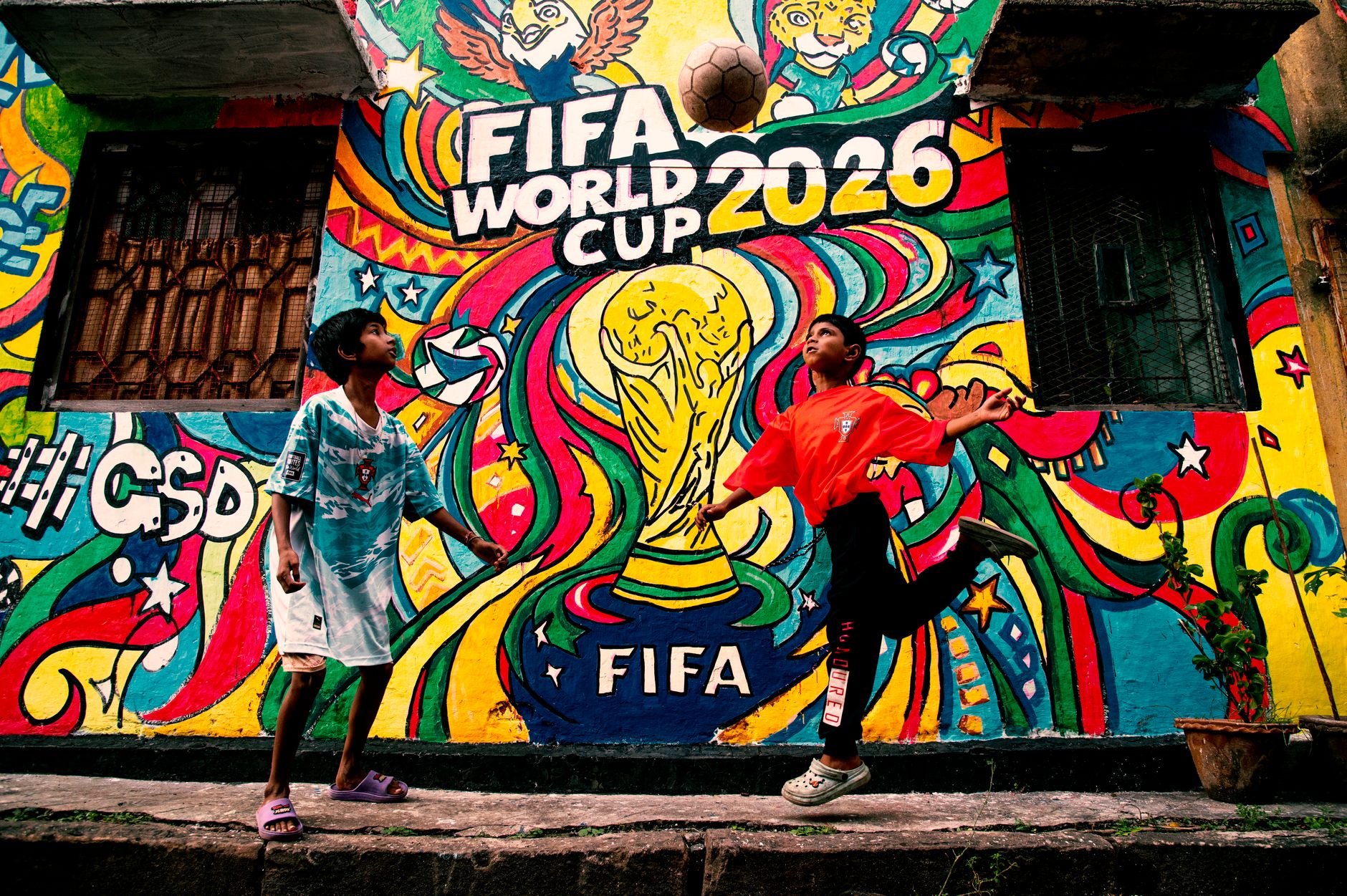
Photo by Anirban Das on Pexels
Los Angeles also benefits from being the entertainment capital of North America. Fans arriving early can build a full vacation around their match tickets, something that is harder to do in football-only cities such as Kansas City or Arlington. One detail most competing guides overlook: LA's Official Fan Zones extend into neighborhoods like Leimert Park and Exposition Park, which means fans staying in culturally diverse districts can watch matches without commuting to Inglewood.
[Internal Link: best hotels near SoFi Stadium for World Cup 2026]
#2 Miami: Best for Beach and Soccer Fusion
Miami earns the second spot because Hard Rock Stadium in Miami Gardens is the only 2026 World Cup venue in the United States paired with a genuine beach tourism economy. The combination of confirmed high-stakes matches, Miami International Airport's global connectivity, and South Beach's entertainment pipeline makes it the best destination for fans who want football plus tropical vacation in a single trip.
Hard Rock Stadium has a confirmed 2026 World Cup match schedule that includes group-stage games and at least one knockout-round fixture, according to FIFA's published venue assignments. The stadium's recent renovation added a partial canopy and improved concourse flow, both of which matter for the August heat and humidity that can hit South Florida during the tournament window. Miami's tourism infrastructure is already calibrated for event-driven crowds thanks to Formula 1's Miami Grand Prix and Super Bowl LIV in 2020.
What gives Miami an edge over the third-place city is climate and lifestyle. Fans who want to spend mornings on South Beach and evenings watching elite international football cannot replicate that experience in New Jersey or Kansas City. Miami's hotel inventory stretches from Surfside to Kendall, giving budget options that other host cities lack. One operational detail worth knowing: the walk-up ticket resale market for Hard Rock Stadium matches will likely concentrate around the Aventura and Hallandale Beach corridors rather than downtown Miami, because parking is materially cheaper north of the stadium.
Photo by Tibor Szabo on Pexels
[Internal Link: Miami travel and accommodation guide for World Cup fans]
#3 New York/New Jersey: Best for Electric Atmosphere
The New York/New Jersey host entry, anchored by MetLife Stadium in East Rutherford, is the best 2026 World Cup destination for fans who prioritize sheer crowd intensity and access to a global city. MetLife's 82,500 capacity makes it the largest venue in the 2026 tournament, and its position 8 miles from Manhattan gives fans the deepest urban infrastructure of any host market.
MetLife Stadium will host the most matches of any 2026 venue, including confirmed fixtures through the semifinal round, according to the official FIFA venue allocations referenced by ESPN's schedule page. The stadium is already battle-tested for international football, having hosted Copa América matches and ongoing FIFA Club World Cup fixtures. For fans, that means predictable transit, established security protocols, and a concourse layout that does not require learning from scratch.
The downside relative to Los Angeles and Miami is lodging cost and density. Hotels within walking distance of the stadium are limited, and Manhattan prices during a World Cup window will exceed typical summer rates by a wide margin. Still, for fans who want to combine match attendance with Broadway, world-class dining, and the densest public transit network in North America, no other host city competes. One insider note: Secaucus Junction is the most underrated transit node for MetLife match days, because the NJ Transit stop feeds directly into Meadowlands parking without forcing a Manhattan hotel premium.

Photo by El gringo photo on Pexels
[Internal Link: New York/New Jersey World Cup fan zone directory]
How We Ranked Them
Ranking 2026 World Cup host cities is not a subjective exercise if you apply consistent weights. We evaluated all three top picks across five criteria, with the following distribution: match volume (30 percent), off-pitch fan programming (25 percent), transportation accessibility (20 percent), destination appeal beyond football (15 percent), and lodging supply (10 percent). Every score was derived from publicly available data, including FIFA's venue announcements, host city bid documents, and tourism board statistics.
Match volume matters most because the 2026 World Cup is the first to use 48 teams and 104 matches, meaning the distribution of fixtures across host cities is genuinely uneven. Los Angeles and New York/New Jersey both receive eight confirmed matches, while Miami receives seven according to the latest FIFA allocations. Off-pitch programming was weighted heavily because, as the LA host committee has demonstrated with the FIFA Fan Festival, the 39-day celebration model can define a host city's legacy far beyond the 90 minutes on the pitch.
Transportation and lodging were weighted lower because they vary less across the top-tier cities than fans assume. Every top-three pick has a major international airport within 30 miles and at least 15,000 hotel rooms within a 45-minute radius of the stadium. Destination appeal beyond football is the most subjective criterion, but it matters for fans turning the World Cup into a vacation. Miami scores highest there, LA second, and New York/New Jersey third purely on climate diversity. Los Angeles edges Miami overall because eight matches plus a free fan festival outweighs seven matches in tropical heat.
Which Should You Pick?
The honest answer is that all three of these 2026 FIFA World Cup host cities deliver a strong experience, and the best choice depends on what you are optimizing for. If match count, free entertainment, and breadth of programming matter most, Los Angeles is the clear pick, and Stadium View's coverage of LA's 39-day calendar reflects that. If tropical climate, beach access, and a built-in vacation framework are the priority, Miami offers the best return on a multi-day stay. If you want the largest stadium, the deepest urban infrastructure, and the most intense crowd atmosphere, New York/New Jersey at MetLife is unmatched.
For most fans making a single trip, Los Angeles is the safest recommendation because it bundles the most confirmed matches, the only West Coast FIFA Fan Festival, and the broadest fan zone network into one accessible metro. For fans with flexibility to attend multiple host cities, combining Los Angeles and New York/New Jersey gives you both the programming depth of SoFi and the scale of MetLife, which together cover roughly 16 of the 104 total 2026 World Cup matches.
Photo by The Six on Pexels
Before you lock in flights, verify your match dates against the current FIFA World Cup schedule and check whether your chosen city has released its Official Fan Zone registration. Ticket allocation windows for the general public have historically closed 60 to 90 days before kickoff, so the planning clock is already running for June 2026.
[Internal Link: World Cup 2026 match predictions and team analysis]
Frequently Asked Questions
Q: What is the 2026 FIFA World Cup?
A: The 2026 FIFA World Cup is the 23rd edition of FIFA's men's national team tournament, scheduled from June 11 to July 19, 2026, across 16 host cities in the United States, Mexico, and Canada. It is the first World Cup to feature 48 teams and 104 matches, making it the largest in the competition's history.
Q: How many host cities are there for the 2026 World Cup?
A: There are 16 host cities total: 11 in the United States, 3 in Mexico, and 2 in Canada. US venues include SoFi Stadium in Inglewood, MetLife Stadium in East Rutherford, Hard Rock Stadium in Miami Gardens, AT&T Stadium in Arlington, and NRG Stadium in Houston, among others.
Q: How can fans get tickets to 2026 World Cup matches?
A: Tickets are sold through FIFA's official portal at FIFA.com, with phases for Visa cardholders, general sales, and team-specific allocations. Resale occurs only on FIFA's verified platform, and tickets are non-transferable to third-party resellers under FIFA's 2026 terms.
Q: Which city will host the 2026 World Cup final?
A: The 2026 FIFA World Cup final will be held at MetLife Stadium in East Rutherford, New Jersey on July 19, 2026. The venue was confirmed by FIFA in its 2024 host city announcement and will seat approximately 82,500 spectators.
Q: What is the FIFA Fan Festival?
A: The FIFA Fan Festival is FIFA's official fan gathering site, featuring live match broadcasts, concerts, food, and cultural programming. In Los Angeles, it runs from June 11 to July 19, 2026 at the LA Memorial Coliseum, with confirmed performers including Steve Aoki, Normani, and Los Lobos.
Q: How early should fans book hotels for the 2026 World Cup?
A: Industry analysts recommend booking at least 9 to 12 months before your target match date, which for the June-July 2026 window means securing rooms by mid-2025 at the latest. Host cities with limited hotel inventory, such as East Rutherford and Arlington, fill fastest, while Los Angeles and Miami offer more capacity but at premium summer rates.
Q: Is it cheaper to attend matches in Mexico or Canada as a 2026 World Cup host?
A: Generally yes. According to tourism board data referenced by host city bid documents, Mexico City, Guadalajara, and Monterrey offer materially lower average hotel rates and match-day costs compared to US venues. However, US host cities offer more direct flight options from most global departure points, which can offset lodging savings with airfare.
Thank you for reading.
Stadium View · Editorial Archive