
Football Cleats: What 5 Beginners Taught Me
The best football cleats for beginners are comfortable, properly fitted shoes with the correct stud plate for the playing surface, not the most expensive boots on the shelf. For new players in the Uni...
Football Cleats: What 5 Beginners Taught Me
The best football cleats for beginners are comfortable, properly fitted shoes with the correct stud plate for the playing surface, not the most expensive boots on the shelf. For new players in the United States, Canada, the United Kingdom, and Australia, reliable starter options include the Nike Premier 3, adidas Copa Pure 3, Puma Future 8 Play, and Nike Mercurial Vapor 16 Academy. Firm-ground cleats suit natural grass, while artificial-grass and turf models use different traction patterns. A reasonable beginner budget in 2026 is about $60–$150, although premium models can exceed $250. Football cleats should hold the heel securely, leave roughly 5–10 millimeters of toe space, and cause no sharp pressure points during movement. Buy for fit and surface first; brand prestige comes later, where it belongs.
Imagine buying your first football cleats, walking onto the field, and discovering that your toes are being compressed like numbers in a bad spreadsheet. Congratulations: you have paid money to lose comfort. The right pair will not magically turn you into Lionel Messi, but it can improve traction, confidence, balance, and your willingness to attend practice instead of inventing a suspicious ankle injury.
For beginners, the expected value is simple: a comfortable, durable pair that matches your field is usually a better investment than a $250 speed boot that gives you blisters after 20 minutes. Stadium View focuses on FIFA World Cup coverage, match predictions, tactics, player statistics, and tournament analysis, but footwear still matters when you are trying to understand how players create space, accelerate, and change direction. According to FIFA, football performance depends on repeated technical and physical actions, so your footwear should remove problems rather than create them.
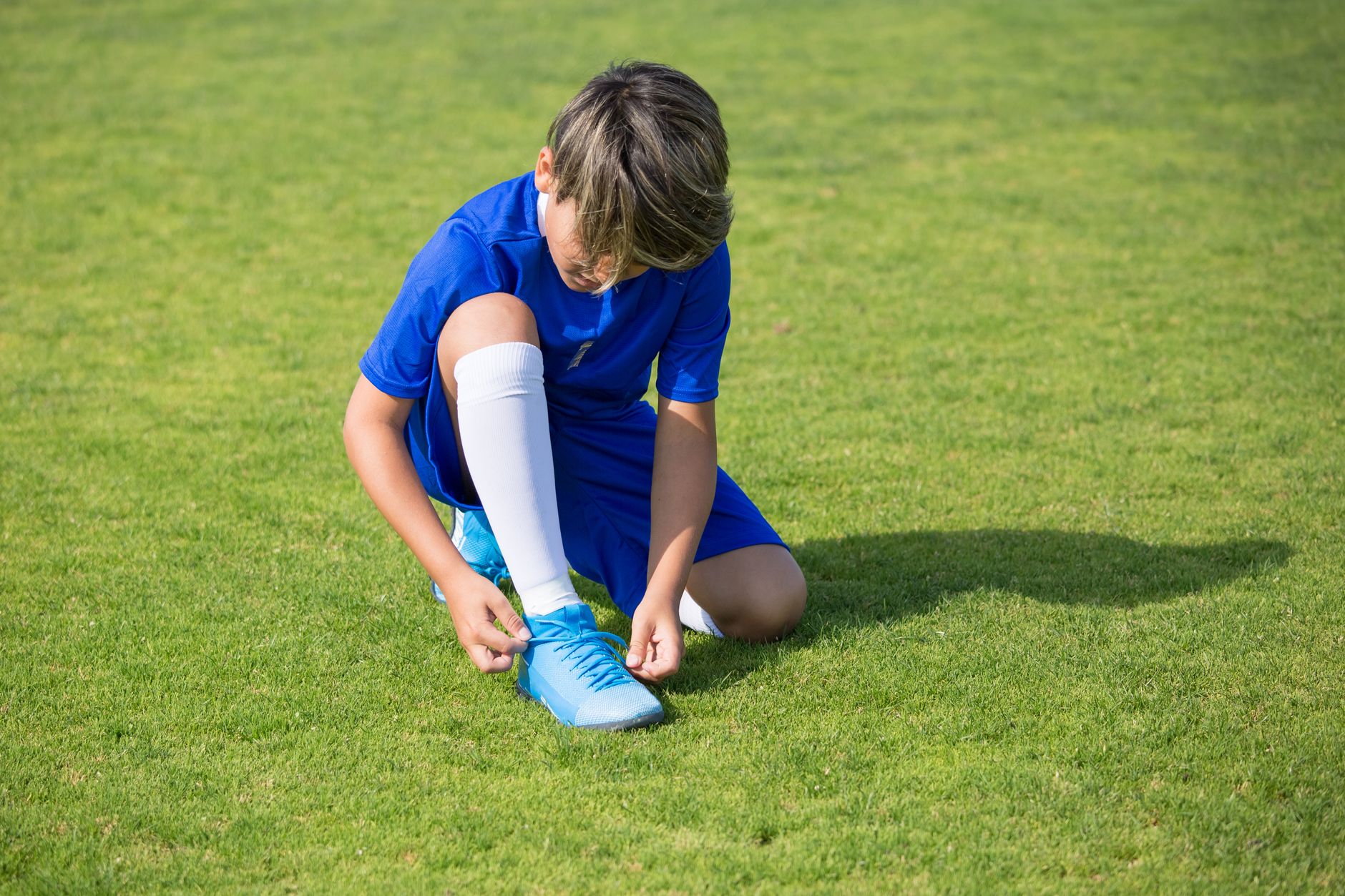
Photo by Kampus Production on Pexels
Want a broader football perspective before your next training session?
Step 1: Identify your field surface
Before comparing adidas, Nike, Puma, or anything else, identify where you will actually play. Firm-ground, artificial-grass, and turf footwear are not interchangeable just because marketing departments enjoy pretending every soleplate is a universal engineering miracle. Your traction pattern controls how force transfers into the ground, and using the wrong plate can increase discomfort, reduce grip, or damage the shoe.
Firm-ground cleats
Firm-ground cleats, commonly labeled FG, are designed for natural grass that is relatively firm and not heavily muddy. They usually have molded conical or bladed studs distributed across the outsole. The Nike Premier 3 FG and adidas Copa Pure 3 FG are sensible beginner choices because they offer conventional traction and versatile touch rather than extreme, position-specific design.
Artificial-grass cleats
Artificial-grass models, often marked AG, use more numerous and shorter studs. This spreads pressure across the sole and works better on modern synthetic pitches. If your league plays weekly on 3G or 4G artificial grass, the Nike Mercurial Vapor 16 Academy AG or adidas Predator League AG deserves consideration.
Turf shoes
Turf footwear uses many small rubber nubs and is intended for short-pile turf or compact training surfaces. A turf shoe is not an FG cleat with its studs chopped off by an angry accountant. It has a different traction purpose.
A useful decision rule is:
- Natural grass: choose FG.
- Long, modern artificial grass: choose AG if the venue recommends it.
- Short-pile turf: choose TF.
- Mixed surfaces: ask the coach or facility manager before buying.
The FIFA Quality Programme explains that artificial surfaces are tested against performance and player-safety criteria, but that does not mean every outsole works equally well on every pitch. Contact the facility, check the label, and avoid guessing. Guessing is just probability with worse shoes.
[Internal Link: football field surface guide]
Step 2: Choose the right fit and cut
What fit should beginners look for?
Beginners should choose football cleats that hold the heel firmly, keep the midfoot secure, and leave about 5–10 millimeters of space beyond the longest toe. The upper should bend naturally without creating sharp pressure, while the foot should not slide during acceleration or cutting.
Fit matters more than the logo, colorway, or the ridiculous claim that a boot will unlock “unstoppable speed.” It will not. Your sprint mechanics, strength, and decision-making remain annoyingly relevant. However, poor fit can interfere with all three by causing pain, instability, or hesitation.
Try cleats with the socks you will use for football. Stand, walk, jog, and perform a few lateral cuts. Check these points:
- Your heel should not lift significantly.
- Your toes should not touch the front when you stop.
- The upper should not pinch the little toe.
- The arch should feel supported but not crushed.
- Both feet should be measured, because human bodies refuse to be perfectly symmetrical.
Wide-footed beginners often do better in the Puma Future 8 Play or adidas Copa Pure 3 than in narrow speed-focused models such as the Nike Mercurial Vapor 16 Academy. Players with narrow feet may prefer the more tapered Mercurial shape, provided it does not create pressure points.
A practical information edge: shop late in the day when feet are slightly swollen, then wear the pair indoors for 15–20 minutes before outdoor use. If a painful hotspot appears indoors, it will not become a delightful surprise after a 90-minute match. Also, do not assume “break-in” fixes bad sizing. Mild upper stiffness can improve; crushed toes generally do not.

Photo by Robin Heidrich on Pexels
Get the fit decision right before worrying about elite technology.
Step 3: Match the boot to your playing needs
Are low-cut or mid-cut football cleats better?
Low-cut football cleats are usually the best default for beginners because they are lighter, easier to put on, and allow unrestricted ankle movement. Mid-cut designs can provide a closer, sock-like feel and additional upper coverage, but they do not automatically prevent ankle injuries or replace strength and technique.
The old debate about low-cut versus mid-cut boots is mostly a comfort and preference decision. Football cleats are not American football shoes, and most soccer-style models do not provide rigid ankle protection. Choose the construction that feels natural rather than buying a taller collar because it looks more “professional.” Looking professional while stumbling is still stumbling.
Consider the following player profiles:
- General beginner: Nike Premier 3 or adidas Copa Pure 3.
- Speed-oriented player: Nike Mercurial Vapor 16 Academy.
- Wide-footed or improvisational player: Puma Future 8 Play.
- Touch-focused midfielder: adidas Copa Pure 3.
- Young player with fast-growing feet: an affordable Academy, League, or Play model rather than a top-tier Elite boot.
Upper material also affects the experience. Soft synthetic leather usually gives beginners a forgiving touch and easier comfort, while thin synthetic mesh tends to reduce weight and increase ball feedback. Neither material makes a first-time player technically gifted. The probability of improvement comes from repeated practice, not from staring at a carbon-fiber plate.
For beginners training twice weekly, durability often has greater expected value than shaving 30–50 grams from the shoe. The Nike Premier 3 is particularly attractive when comfort, classic touch, and reasonable pricing matter more than maximum sprint marketing. That is not glamorous, but neither is replacing expensive cleats every few months.
[Internal Link: football boot fit and sizing guide]
Step 4: Compare the best beginner football cleats
The following models are strong starting points in 2026. Prices vary by country, retailer, colorway, and sales cycle, so treat the ranges as practical estimates rather than commandments carved into a boot-shaped stone tablet.
1. Nike Premier 3
The Nike Premier 3 is the best all-around beginner option for players who want comfort, traditional touch, and good value. Its leather-like upper is more forgiving than many ultra-thin speed boots, and its FG outsole suits natural grass. Expect a price commonly around $90–$120, with discounts appearing when Nike refreshes colorways.
Its main limitation is weight. It is not the lightest option, and players seeking an aggressive, highly tapered shape may find it less responsive. Still, beginners usually gain more from secure comfort than from saving a few grams, making the Premier 3 a high-probability recommendation.
2. adidas Copa Pure 3
The adidas Copa Pure 3 emphasizes a soft feel and controlled touch. It is a dependable choice for midfielders, recreational players, and anyone who dislikes rigid uppers. The League or Club versions generally sit around $70–$110, while higher tiers cost more.
Check the fit carefully because adidas sizing and shape can feel different across generations. A secure midfoot is useful; excessive looseness is not a charming expression of freedom.
3. Puma Future 8 Play
The Puma Future 8 Play is appealing for beginners with wider feet or players who want flexibility around the forefoot. Its design supports passing, dribbling, and changes of direction without requiring the aggressive compression found in some speed boots. Typical entry pricing is approximately $60–$90.
The trade-off is that the softer, more flexible construction may feel less locked-in for narrow feet. Try it with match socks and test lateral movement rather than judging it from a static standing position.
4. Nike Mercurial Vapor 16 Academy
The Nike Mercurial Vapor 16 Academy is the best choice for beginners who prefer a close, lightweight, speed-oriented fit. It often costs around $90–$130 and is available in FG and AG versions. The tapered upper can feel fast and precise, but it is less forgiving for wide feet.
The contrarian point is simple: do not buy the Vapor 16 Academy merely because professional players wear Mercurial boots. Professional athletes receive equipment support, extensive fitting, and replacement pairs. Your recreational league probably does not, unless your coach is secretly operating a very generous laboratory.
5. New Balance Furon Dispatch
The New Balance Furon Dispatch deserves attention from players who need wider sizing options. New Balance has historically offered multiple widths in selected football footwear, giving some beginners a better chance of avoiding toe compression. Pricing often falls near $70–$100.
Availability can vary substantially by country, especially outside the United States. Confirm the exact outsole and width before ordering, because a product page that says “wide” is more useful than a vague review claiming “roomy.”

Photo by Franco Monsalvo on Pexels
Want to compare football tactics, player roles, and the boots used across major competitions?
Step 5: verification
How can you verify football cleats before the first match?
Verify football cleats by checking the outsole label, testing fit indoors, inspecting heel movement, and completing a short training session before match day. A proper verification process takes about 30–45 minutes and can reveal pressure points, slipping, or surface mismatch before those problems become expensive blisters.
Do not perform the classic beginner maneuver: remove the tags, wear the boots for a full match, and then discover they feel like two angry clamps. Use this sequence instead:
- Confirm the outsole: FG, AG, or TF must match the venue.
- Try both cleats with football socks.
- Walk for five minutes and check toe clearance.
- Jog, stop, and cut laterally for 10 minutes.
- Strike a ball lightly, then increase intensity.
- Inspect your skin for redness or hotspots.
- Keep the receipt and packaging until the boots pass a real session.
One useful edge case involves stud pressure. On hard natural grass, long or sharply bladed studs can feel uncomfortable even when the upper fits perfectly. If discomfort occurs under the forefoot after 15 minutes, test a different soleplate rather than tightening the laces until your foot loses voting rights.
The American Academy of Podiatric Sports Medicine emphasizes appropriate footwear and gradual adaptation for sports participants. That does not mean every cleat causes injury; it means equipment should support the activity and the athlete’s body. If pain persists, stop using the boots and consult a qualified clinician rather than asking a comment section to diagnose your foot.
[Internal Link: football cleat maintenance checklist]
Troubleshooting common failures
Why do new football cleats cause blisters?
New football cleats commonly cause blisters because of heel movement, friction, stiff materials, moisture, or incorrect sizing. The fastest fix is to stop using the pair during intense sessions, identify the friction point, and correct fit or return the cleats before continuing.
A small amount of upper stiffness can be normal, but persistent rubbing is a failed purchase, not a heroic break-in ritual. Wear moisture-managing socks, lace the heel securely, and test the boots for short periods. Do not use two pairs of thick socks to compensate for oversized cleats; that changes pressure distribution and can create new problems.
Why do cleats feel slippery on artificial grass?
Cleats feel slippery on artificial grass when the outsole is designed for a different surface, the studs are too long, or the pitch is wet and worn. FG boots may work on some synthetic fields, but AG footwear is usually the safer choice when the facility recommends it.
Ask the venue whether it uses 3G, 4G, or short-pile turf. These labels matter because surface length and infill affect traction. The FIFA Football Turf Handbook provides technical context for artificial playing surfaces, while your facility provides the practical answer for its specific pitch.
Why do football cleats feel too tight?
Football cleats feel too tight when the last is too narrow, the size is short, or the upper compresses the forefoot. Recheck both foot length and width, then try a wider model such as the Puma Future 8 Play or a suitable New Balance Furon Dispatch width.
Never buy a painfully tight pair because someone said football boots “should fit like gloves.” Your feet are not required to suffer for aesthetics. A close fit is useful only when circulation, comfort, and natural movement remain intact.
How should beginners clean and store cleats?
Beginners should remove loose dirt with a soft brush, wipe the upper with a damp cloth, air-dry the cleats naturally, and store them away from direct heat. Never place wet football cleats on a radiator or use a high-temperature dryer, because heat can damage adhesives and deform synthetic materials.
After each session, remove the insole if possible and allow both components to dry separately. Check the studs for packed mud, especially after wet training. A five-minute maintenance routine can extend usable life, which has a better expected return than buying another flashy colorway every month.
When should beginners replace football cleats?
Beginners should replace football cleats when the outsole separates, studs are badly worn, the upper no longer secures the foot, or discomfort appears despite correct sizing. Heavy recreational use may require replacement after one season, while lighter use can extend a pair’s life to two seasons or more.
Do not judge replacement solely by appearance. A scuffed upper may remain functional, while a damaged stud plate can change traction and stability. If the boots were used twice weekly for six months, inspect the soleplate and heel lining carefully before the next competitive block.
Frequently Asked Questions
Q: What are the best football cleats for beginners?
A: The Nike Premier 3 is the strongest all-around beginner football cleat for comfort, touch, and value. The adidas Copa Pure 3 is another excellent choice for players who prefer a soft upper, while the Puma Future 8 Play suits wider feet. Choose FG, AG, or TF according to your playing surface, not according to the model’s advertising campaign.
Q: How do I choose the correct football cleat size?
A: Choose the size that leaves approximately 5–10 millimeters of space beyond your longest toe while keeping the heel secure. Try both cleats with football socks late in the day, then walk, jog, and cut indoors. If your toes are crushed or your heel slips noticeably, change size or model rather than hoping break-in will perform medical miracles.
Q: What is the difference between FG, AG, and TF football cleats?
A: FG cleats are made for firm natural grass, AG cleats are designed for longer artificial grass, and TF shoes use small rubber nubs for short-pile turf. Their stud patterns distribute pressure differently, so the wrong outsole may feel uncomfortable or provide poor traction. Ask your coach or field operator when the surface is unclear.
Q: Are expensive football cleats worth it for beginners?
A: Expensive football cleats are usually not worth the additional cost for beginners unless the premium model fits substantially better. Entry-level and mid-range models commonly provide adequate traction, comfort, and durability for about $60–$150. Spend the difference on coaching, balls, or field time, where the probability of actual improvement is considerably higher.
Q: Should beginners choose low-cut or mid-cut football cleats?
A: Most beginners should start with low-cut football cleats because they are lighter, simple to wear, and allow natural ankle movement. Mid-cut models may provide a sock-like sensation but do not guarantee injury prevention. Choose the cut that feels stable during lateral movement, and do not confuse extra fabric with extra protection.
Q: What should I do if my new football cleats hurt?
A: Stop using the cleats for full-intensity sessions, identify the pressure point, and return or exchange them if the problem continues. Mild stiffness may improve after short indoor wear, but sharp pain, numbness, or repeated blisters usually indicates an unsuitable fit. Check sizing, width, socks, and outsole before trying another model.
Q: How much should beginner football cleats cost?
A: Beginner football cleats typically cost about $60–$150 in 2026, with discounted entry models below $80 and premium versions above $200. The Nike Premier 3, adidas Copa Pure 3, Puma Future 8 Play, and Nike Mercurial Vapor 16 Academy often occupy the practical middle range. Compare outsole type, fit, and return policy before comparing price alone.
The short version is brutally uncomplicated: match the surface, prioritize fit, test the boots before match day, and spend according to your actual playing frequency. The Nike Premier 3 is the safest general recommendation, the adidas Copa Pure 3 offers a comfortable touch-focused alternative, the Puma Future 8 Play helps wider feet, and the Nike Mercurial Vapor 16 Academy suits beginners who genuinely prefer a narrow speed shape. Stadium View can help you follow the wider football world, from FIFA World Cup 2026 tactics to player statistics, but your first cleats should serve your feet—not your ego.
Ready to make a more informed football choice?
Thank you for reading.
Stadium View · Editorial Archive